Blog Nine: HSA Retreat (My Experience)

4 Minutes Read


On October 20th, I went on a retreat with the Hmong Student Association to Sycamore Groove in Red Bluff. I joined the Hmong Student Association club at CSU, Chico at the beginning of the semester. For this blog, I wanted to write about a place where I felt most comfortable. You may be wondering, why are you writing about your retreat or Sycamore Groove when it’s not even a place you frequently visit? I’m writing about my experience of the retreat because it was a place where I felt most comfortable so far in my college experience. When the idea of going to the HSA retreat was brought up in the first general meeting in HSA, I signed up to go without hesitation. I didn’t know it at the time but would become one of the best experiences of my life. It’s my first time going camping in Sycamore Groove and it was like nothing I ever expected. When I thought about going camping, I imagined being out in the wild but that wasn’t the case when I arrived at the campsite. This was also my first time going camping, so I had no idea what it was going to be like. But as the days became closer to the day of the retreat, I began to feel less comfortable going because the week of the retreat, it was an extremely busy week for me. I had to go to a mandatory job fair held for EOP students, studying for midterm and other school-related things. Plus, I also had homework that was due for my class over the weekend. I still ended up going because I just said, “fuck it” and I’ll take the L for the assignment (I still managed to finish the assignment on Sunday night when we returned from the retreat).

The HSA retreat members and I went camping in Sycamore Groove for three days (October twentieth – twentieth second). At the beginning of the retreat, I only knew a couple of people who went to the retreat. We arrived at the campsite around six pm and everyone was tasked with different jobs. The men began setting up the three tents and the women began cooking dinner. After setting up the tents, half of the HSA officers took over cooking dinner and the other half led the retreat members in icebreaker activities to have everyone more comfortable with each other. It was a lot quicker than I imagined for everyone to be comfortable and social with each other. After the icebreaker activities, it got dark super quick and it was beginning to be cold, very cold (I hate the cold and rain… a lot, fortunately, it didn’t rain). For some reason seeing the night being pitch black, reminded me somewhat of the walking dead, like how a zombie could just pop out of nowhere and the difficulty of seeing in the dark.

After eating Hmong soup for dinner and socializing for three to four hours. We gathered into the men’s tent and roasted each other for two hours and by the time we finished, it was around one in the morning. We said good night to each other and went to sleep. The next morning, I volunteered to be part of the breakfast crew and we were supposed to wake up at seven and have breakfast prepared by eight-thirty. That didn’t happen, sleep was more important for the breakfast crew. I woke up around six and Kenji and I went to the men’s bathroom to wash up and get ready for the day. The showers in Sycamore Groove were neat and the hot water was heaven. Once my body contacted the hot water, I did not want to get out of the shower at all. That took me thirty to forty minutes to get ready in the morning. After getting dressed, Kenji and I went back to the campsite to help prep breakfast. Cleaning and cutting potatoes was what I was mostly doing in the morning. Around eight when everyone started getting up. We ate and then continued with the planned activities the HSA officers had planned.

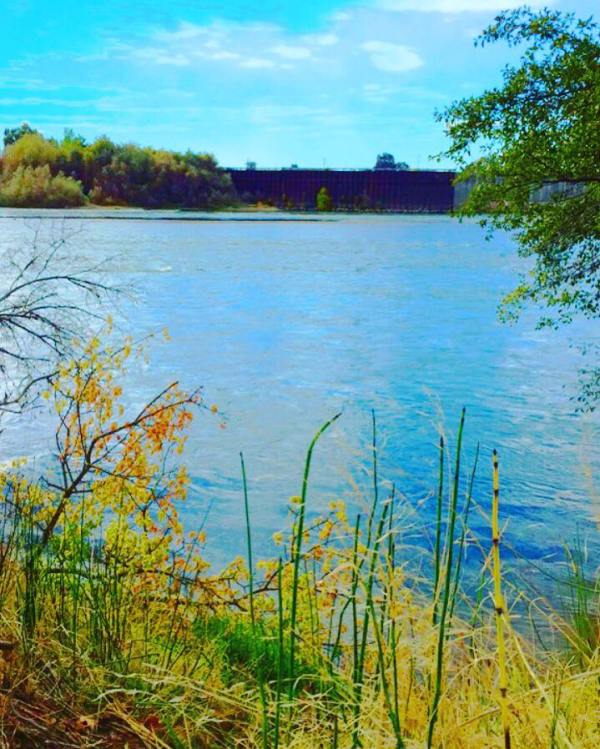
My favorite individual part of the retreat was the free time we had before lunch when we could rest or explore the area. I explored the area by the river only. It was very calm and peaceful there. I took that opportunity to sing, I haven’t really had the chance to just sing and not care about anything else in the world. I sang for about thirty to forty minutes and it was very relaxing. I sang songs from high school and other hit songs. The rest of the retreat went by in a blur and I couldn’t believe how fast it went by. But every moment was worth it, I made new friends and I’m very grateful for the experience I had in that short time. (820)

Blog Eight: Rules

3 Minutes Read


Before writing this blog, I need to go back a bit and explain some things, so you won’t be too confused about why and what I’m writing about. For my University 101 class, we have a semester-long project called the Guidebook Project. This guidebook project is to have a group of students write informative things about a particular place. The place that my group and I wanted to research and find out more about was the Study Abroad Office. After researching the study abroad office for the majority of the semester, my guidebook group and I will present our research and findings in a symposium to spectators. That is why for the past blogs (four – seven) I’ve only written about the study abroad office or things that are related to it. For commitment and accountability purposes my group and I have developed a set of rules to help us stay on track until our symposium on December fifth.

I’ll begin with the rules that we’ve come up with. Our rules are; communication (as a whole we decided that our lack of communication has really affected our ability to work cohesively, we must let each other know when things are due in case of forgetfulness, and reminders when we are meeting up), participation (my group and I decided it’s important that everyone carries their weight as much as possible, participate is a must, our group can’t rely too much for one or two people to do most of the work, everyone’s contribution is important), show up to our group meetings (we have decided to meet up every two weeks until our symposium on December fifth, showing up is a must, an obligation, not an option, unless an emergency emerges, my group and I must be at our meetings), hold each other accountable for their actions and lack of action (a consequence for not being able to show up to the meetings is the member(s) owes the group lunch or Dutch bros, I came up with this rule to give some type of motivation to not flake out on meetings), everyone must have the latest blog post done by the next meeting (in order to produce good work for the guidebook, the whole groups’ travel blogs have to be polished and done to have good content), and the last rule is knock off ten – twenty points off of one group member’s grade if they don’t show up to the meetings.

Essentially it’s a double penalty for someone who can’t make it to the meeting. We understand that extreme shit happens but communicate that with us before that they won’t be able to be there at the meeting. Nate came up with the last rule, it was added a day or two after because in case if someone can afford to pay for lunch, they might be more inclined to not show up to the meeting, this way they know that their grade won’t be too salvageable if they don’t show up. On the timeline, Mattie has mapped out the days we will work on our guidebook and when things are due. Everyone has a photo of the timeline and rules on their phone. We had our first group meeting on the second of this month, and our next two meetings are on the sixteenth and thirtieth of this month. Mattie has also listed when blog posts are due. Overall, we want each other to succeed and pass this class, and I know that I’ve been in a slump lately. I’m slowly getting out of it and getting my shit together so that I don’t let down my group. More importantly, so I don’t let down myself, so I won’t have regrets later on.

Study Abroad Guidebook: Blog Six

4 Minutes Read


After visiting the study abroad info session, I made an appointment to see one of the study abroad advisors for November six. During the info session, we were introduced to four study abroad programs, USAC, IP, AIFS, and Direct Exchange. USAC and AIFS aren’t based in California so CSU students like myself won’t be able to use state grants to fund our study abroad expenses. USAC and AIFS are both “first come first serve” bases. The available options for a student that is looking to USAC, the available options are one semester, winter, summer, or a yearlong abroad. IP is the official study abroad program at CSU, Chico. It’s more competitive to get in because you are competing against other CSU students from all campuses. IP is a yearlong program, there aren’t any other options available. With Direct Exchange, it’s basically a CSU student swapping places with another student in a different country affiliated with CSU, Chico. The two students will swap places, meaning the CSU student will go to that country and the student from that country will come here to CSU, Chico. The only problem with this is that there must be a student who wants to come over.

All the programs offer different amounts and varieties of benefits. Even though my education is mostly funded by Financial Aid, I decided to meet with the USAC advisor because the USAC program offers, more of a hands-on experience and I don’t really want to mess up my experience abroad. My appointment was scheduled at two-twenty pm with Cecilia Lapolli. I arrived at two- ten pm and I checked in with the front desk. I sat down and observed the waiting once more. There weren’t a lot of students present again just like the other time I was previously in the office. I didn’t have to wait long before Cecilia came out to greet me.

We greeted each other and headed to her office, where she asked me when and where I wanted to study abroad. I answered with South Korea and that I wanted to go in my junior year. We discussed a little about my financial aid and how long I wanted to go. We looked at all the available scholarships that are for study abroad students. Through that discussion, we agreed that the IP program will be most beneficial to me. We looked through the IP program and found that there are two universities that are available for studying abroad in. Yonsei and Kookmin are the two available universities. For the IP program, there are some requirements that a student has to meet before applying for the IP program; students must have a 3.0 GPA, year of departure must be either a junior or senior, and have no records/incidents with student judicial affairs. After going through the general things, Cecilia asked me if I have any additional questions.

I said yes and proceeded to interview her on some questions I had previously made before coming to the appointment. I first asked her what is an obstacle most students face when they go study abroad? Cecilia replied that the most frequent thing students experience is culture shock. I asked more about culture shock and whether is it an immediate thing or does it take time to develop? She answered that it is different with every student, some could happen as soon as they land in the country and some could happen months later. Next, I asked what financial difficulties do students face when dealing with payments to the University or USAC? Cecilia replied that the most common difficulty that a student experiences financially is meeting deadlines when things are due. One of the questions I asked was do I need to attend another info session next year as well. She said that students only need to go to one info session and then they are registered into the system. I asked what is a peer advisor and how do I set up a meeting with a peer advisor? Cecilia explained that peer advisors are more knowledgeable in the specific area that a student may want to go to than a study abroad advisor might know. Meeting with an advisor is more about academics and general stuff. We finished up the meeting and I left the office feeling more confident in studying abroad.

Study Abroad Guidebook: Blog Five

3 Minutes Read


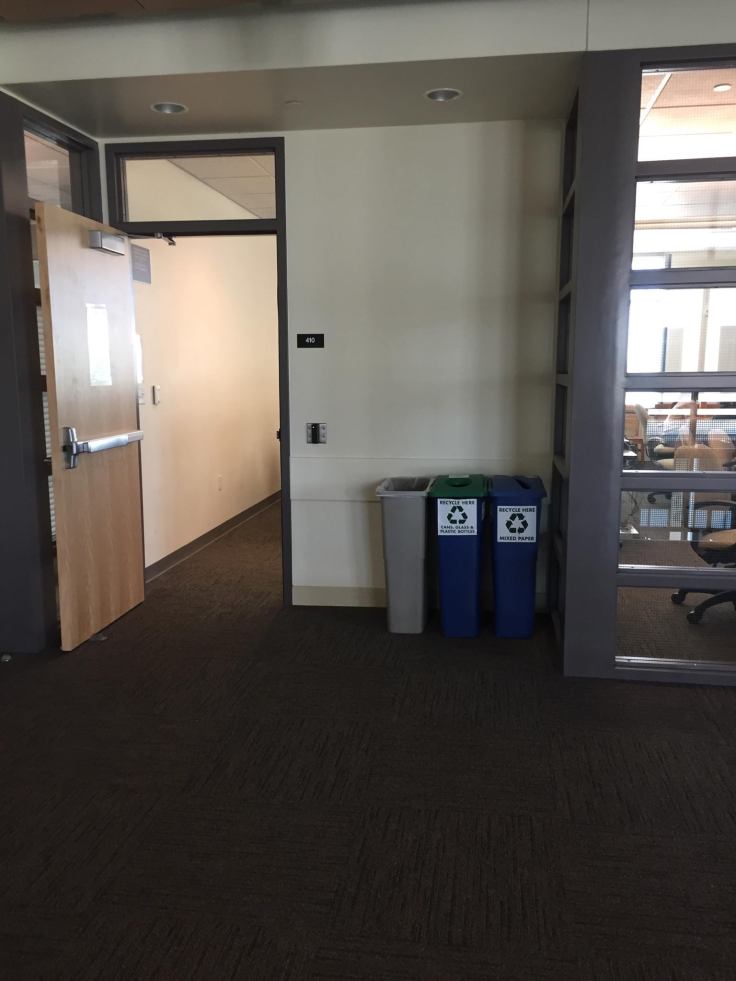
Aside from having to visit the study abroad office for classwork. I plan to go study abroad during my time in college. The year I plan to go study abroad is my junior year. I plan to be in South Korea for a whole year, that’s in 2019/20. I started researching about studying abroad and I found out that in order to have an appointment with a study abroad advisor, a student must attend a study abroad info session before arranging an appointment with a study abroad advisor. In a way, this is an extension of the study abroad office. The study abroad information sessions are offered every week except holidays, dead week, and finals week. The info sessions are available on Tuesdays, Wednesdays, Thursdays, and Fridays. Each day is available at different times. On Tuesdays, the info session is from four–five pm. On Wednesdays, the info session is from five–six pm. On Thursdays, the info session is from eleven am – twelve pm. And on Fridays, the info session is from two–three pm. All info sessions are located in room 410 in the Student Service Center.

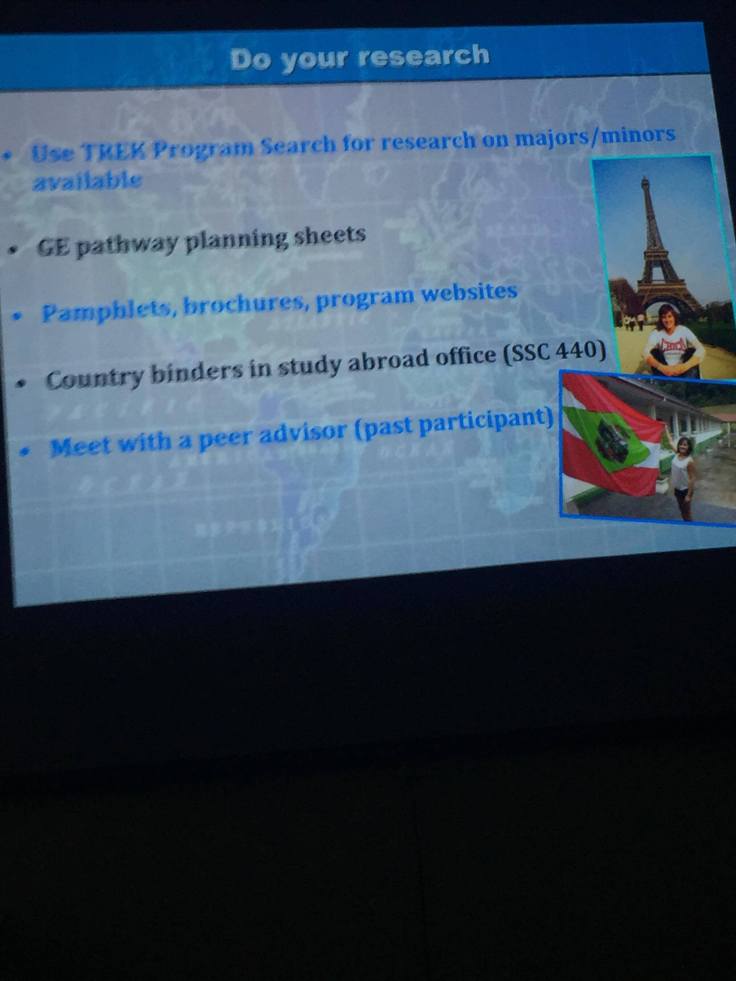
The purpose of the info session is exactly how it sounds. It is to inform students about studying abroad in a more detailed way than a booth at a fair or other place. The info session informs students about what study abroad programs and sites are available through CSU, Chico, how to get classes and units to count toward their major, minor, and/or G.E., the ways to finance their semester or year abroad, the possible and best majors, minors or upper division classes for Study Abroad, how the application process is for each program. After attending the info session, everything that I’ve listed is mentioned and answered at the study abroad info session.

I went to the info session with my friend Peter. We went to the info session on Friday, November third. I expected there to be a handful of students but then I forgot that it was Friday and students don’t want to stay on campus much the day before the weekend. I also forgot that it was November too, which means that most students probably attended an info session earlier in the year. There were only about six or seven students present at the one I went to (not including myself and my friend). We sat down, and the info session coordinator explained to us the timeline of what was going to happen in the following hour.

The info session starts off with greetings and an attendance sheet that is passed around (you don’t have to arrange an appointment to come to an info session, you just have to show up when it is available). After signing in, we watched a twenty-minute video about studying abroad. The video consisted of students being interviewed about their trip abroad, study abroad advisors speaking about the different programs, and the pros and cons of studying abroad. Once the video is done playing, the coordinator begins a presentation about studying abroad in a more in-depth model and goes over information that may not have been mentioned in the video. The presentation lasted for about thirty minutes, and in the last five minutes, the coordinator has the students go up to the front and grab pamphlets, brochures, etc on studying abroad. The coordinator advises that we should set up an appointment with one of the study abroad advisors in the following weeks. With that, the info session ended.

Study Abroad Guidebook: Blog Four

3 Minutes Read


My fourth, fifth, sixth, and seventh blogs will be about the Study Abroad Office in CSU, Chico I will write about my experiences when I visit the study abroad office and the interactions I have with the students and faculties there. Before my classmates and I visited the study abroad office, we first visited the study abroad fair out in front of the Bell Memorial Union. The fair is to spread information to students, passers buyers, and staff about studying abroad. Most of the booths there were led and accompanied by student peer advisors. We split up and went to converse with different peer advisors that were present there. We didn’t stay too long because after talking with one peer advisor, we agreed that there isn’t any need to talk with other peer advisors. We came to that conclusion because most of the information that we are given is regurgitated information from each person besides the peer advisors’ experience from studying abroad.

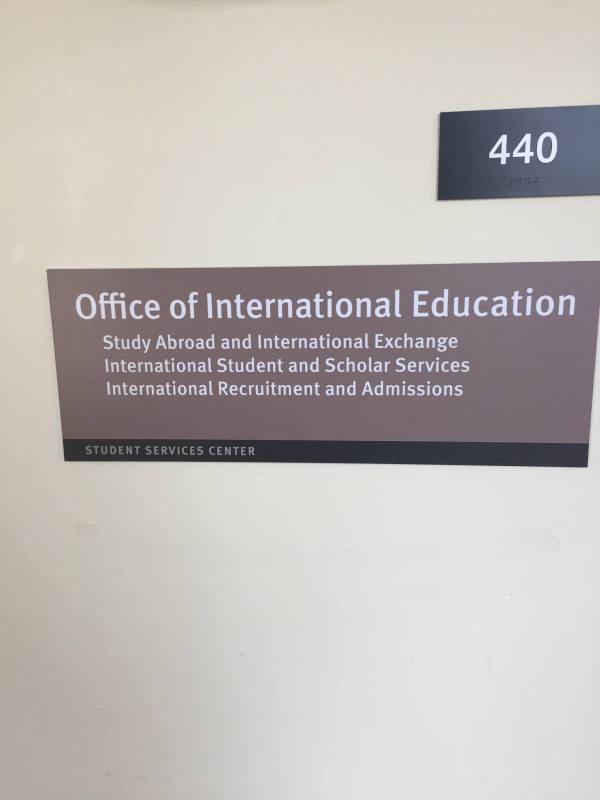
We left the study abroad fair and went to the study abroad office instead. I visited the study abroad office with two members of my guidebook group. Jackie and Nate. We got to the study abroad office around eleven-twenty. The study abroad office is located on the fourth floor of the Student Service Center. The easiest way to get to the office is by elevator, unless you want to exercise then I would recommend using the stairs. As of now, the only other organization that is on the fourth floor is Educational Talent Search, also known as ETS. The office didn’t have a lot of students present when we first arrived, most likely still attending the study abroad fair. The office’s entrance is a double door that is propped all the way open. The doors are decorated with flyers, drawings, information, and other stuff about studying abroad.

We spoke with the person that was stationed at the front desk and explained that we were there to conduct research on the office and to see if we would be able to speak with someone who was knowledgeable about the history of the study abroad office. We were told to have a seat while she went to see if any of the study-abroad advisors were available for interviews. The waiting room is small and doesn’t have a lot of available seats to occupy. There are eight to nine seats, give or take on that. Across the front desk, there is an advisor? I wasn’t quite sure what and who they were. The advisor was talking with a student about Spain. I didn’t want to eavesdrop so much, instead, I focused on what was around us. We sat there observing the area for about five minutes. During that five minutes, there was an influx of students coming in and out of the study abroad office. Some exited the office from their appointments with advisors and some came into the office to arrange an appointment.

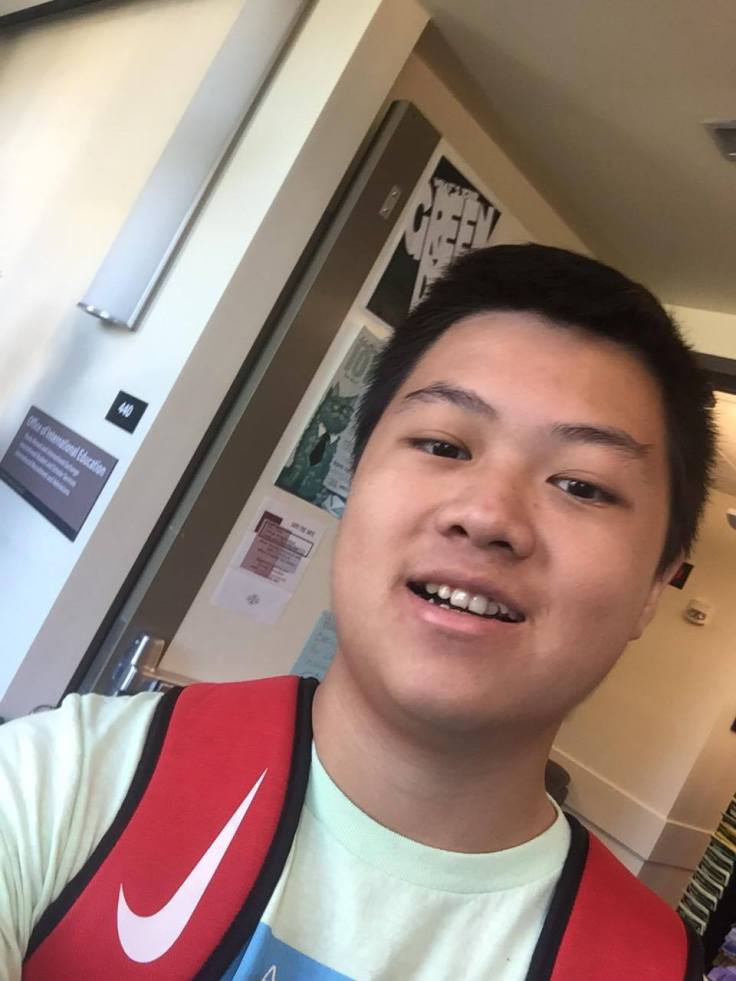
The front desk recipient came back and told us that the study abroad advisors are busy at the moment and that their availability during the day is from one-two pm and five-six pm during the weekdays. We said our thank you and left the office. It was unproductive, to be honest. Before we left, each one of us took selfies as proof of our visitation and exited the office.

Study Abroad Office 12.jpg

Blog Three: 20th Street Park (Chapman Park)

3 Minutes Read


Somewhere that used to be very popular with the Hmong community in Chico is 20th Street Park or also known as Chapman Park in Chico, CA. Growing up and throughout my time at Chapman Elementary, my childhood consisted of going to 20th Street Park the whole summer. During the summertime, the majority of the Hmong community would come out to 20th Street Park and socialize with each other. Thinking back to those times, it was really an incredible thing to be a part of and experience. The reason I say that is because nowadays, the park is populated mostly by homeless people, and the Hmong community is not very present there anymore. The reason why the Hmong community isn’t present there anymore is due to many different reasons. Families moving away from Chico, technology, my generation getting older and we don’t have time to go to 20th Street Park anymore to name a few. Back then, from 3pm – 8pm or 9pm, you would be able to witness just how big the Hmong community really is.

20th Street Park isn’t just utilized by the Hmong community. It is part of Chico’s Recreation and Park District, also known as CARD. CARD hosts multiple kinds of sports games, tournaments, and leagues using 20th Street Park. 20th Street Park has vast expanses of lawns, landscaped trees, soccer fields, and baseball diamonds. Its name is a bit of a misnomer, as it’s located at the north end of Whitman Avenue (bordering Highway 99), and is more behind 20th Street than on it. If you like wide open spaces to enjoy your volleyball or tennis, I would highly recommend 20th Street Park. Chico’s largest outdoor sports park, its 30 acres provide courts along with ball fields, a large playground, barbecue grills, picnic tables, and lots of space to just sit and reflect or to read a good book.

When I visited 20th Street Park it was a sad realization of what it used to be for me. Now I mostly just go to the park to play grass volleyball. My friends and I have grown up from playing tag and hide n go seek to sports. It saddens me that younger generations won’t experience the joy of coming out from home, escaping away from technology, and having fun in the park. I saw a great amount of homeless people whenever I go to 20th Street Park. I believe that there will only be more of an increase in homeless presence in the future. I interviewed some people who were there causally walking their dogs, people playing baseball, tennis, volleyball, jogging, and a few homeless people.

What I learned from the interviews was that the park is somewhat of a home to most people who are here. Not just to homeless people but to the athletes as well. I asked the athletes to explain what they meant by it home to them? One of the athletes said that when they are able to step foot on that field and play their sport. Everything in their mind is cleared and they don’t worry about the past, present, or future. We spoke more about park-related things and we ended our conversation by exchanging each other’s names.


Website Powered by WordPress.com.

Up ↑