ReflecTing

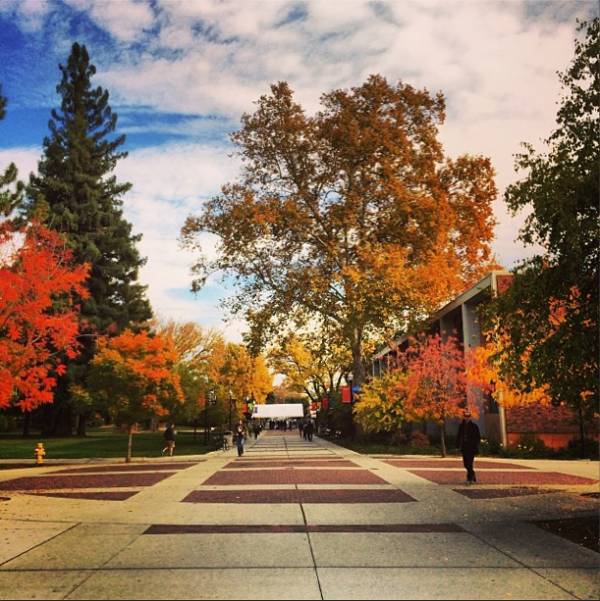
Author’s Note: This is a portfolio that I had to submit for our last assignment for my ENGL 320W – Poetry Writing class at CSU, Chico during my Fall 2020 semester. Below, you will find two poems and one letter to my younger self. I titled my portfolio submission ReflecTing. A bit of wordplay here as I put in my name and touch on the topic of reflecting. If you are reading this on your phone, please turn it sideways to landscape for the correct format! I hope you enjoy these!

8 Minutes Read


Kuv Xav Mus Tsev

My soul soars freely
       spreading love and positivity around me
and I think of ‘home’,
       where silence is an afterthought
and all the seats are occupied,
where laughter waters the flowers.

Kuv xav mus tsev,
nothing beats a home-cooked meal
        made with love and care
and I think of ‘home’,
        where birthdays and holidays are celebrated
throughout the joyful night, lasting till the morning
where I am comforted by angels.

Kuv xav mus tsev,
my homesick body yearns
          and searches for excuses to visit
and I think of ‘home’,
          where words and feelings are heard
and emotions are nurtured and cultivated,
where “I am sorry” is accepted.

Kuv tsis xav mus tsev,
         Don’t give me that look.
         Don’t act so surprised, for this is a simple truth.
         I’ve tested it, my blood is not thicker than water.
         Because none of those things
         exist for me. The only place
where this home exists for me is in my dreams.

It Comes and Goes Like the Seasons

1st-5th:
Meeting new kids and being cautious.
        Maybe this was the time we found our passion?
                       Some began to understand what relationships were really like.
                       “Best Friends for life?”
             Our naïve selves thought these people will be with us forever in our life.
                          How things would have changed if we had listened?
                “You will change, I will too, and each time we do… 
all we can do is live while losing things.”


6th-8th:
“What if we... what if we never changed?”
               Suddenly, popularity was a thing.
               A time when many people both loved and hated.
                      Some stayed close because it was the only option.
                      In some, that root was cut off and burned,
   others were left to journey alone hoping to make friends.
        How great would it be if some of these times would just stay forever?
“I shall grieve, and I shall weep. But I shall not regret it.”


9th-12th:
Let’s stay away from each other for a while. Maybe if I miss it, I will come back.”
         “Maybe, I should text Nelson... it’s been years since we last talked to each other…”
                        “I wanted to be liked too…”
          How much better it would have been if we knew how to love ourselves then?
           We learned something new and our relationships changed too.
                          Things that used to make sense will be questioned.
                          Things that were muddled and foggy became clear and comprehensive.
“Here is a tip, we are all trying to figure it out.”


13th-18th:
A time when we began to understand who we are.
       Some couldn’t wait to leave home and move far away.
          Others began to explore, digging deeper with
             no way out, as their only option was to dig deeper.
                              Immaturity is still rooted in our kid self,
                    and things that used to be worrisome became afterthoughts.
    “I think you and I need a break from each other.”
“Our relationship is like a pie crust, thin, and easy to break.”


20+:
Legal and ready to go, just kidding, no one really has it all figured out.
              “We became adults so quickly, now all we wish for is to revert to kids.”
            How naïve we were… thinking that we “knew” everything, funny isn’t it?
                       Some were fortunate with this gift,
      as a new root replaced it.
That new root decided life or death for some of us.
      “I think this is when I first felt depressed.”
Maybe, this was the time when ending it all came along…?

Letter to a Poet – Manting Xiong

Dear Younger Manting Xiong,

I read your poems “Kuv Xav Mus Tsev” and “It Comes and Goes Like the Seasons” for my class for our final portfolio project. I want to start off by saying thank you for writing and sharing this piece of poetry with the world. I’ve actually read all of your previous works and I really enjoyed the pieces you’ve written this semester for the Poetry Writing class at Chico State. I know your WordPress audience will look forward to you sharing this with your writing collection. I think anyone reading these two pieces will realize the dark tones that accompany them. I noticed that you still write about dark themes and topics, I think it is your way and style to decompartmentalize your experiences and give yourself some type of relief, although I would love to see you attempt to write something more bright and happy, even if that process may be more difficult compose than usual. Maybe try the revision strategy you learned during weeks 15 and 16 using Alberto Rios’ methods? Especially that revision method of writing the poem’s other half, I think you’ll be able to compose something really special with it.

I love the way how you structured these pieces, I can definitely see you getting better at incorporating and thinking about structure in your works. “Kuv Xav Mus Tsev” doesn’t do anything too crazy structure-wise and out of this world but once we got to “It Comes and Goes Like the Seasons” it changed a lot. It can be a bit disorientating reading the piece the first time as the lines jump around a bit but I think that keeps the reader interested, engaged, and focused. Since “It Comes and Goes Like the Seasons” the subject and topic of the poem are about relationships, I think you tried to physically represent how relationships are by moving the lines around. Showing that relationships are never easy and straightforward stacked up neatly going downwards. It has many twists, turns, and complications that come with the territory. You have numbers written above each stanza and to me, it is labels of ages as we progress and grow up. Each stage presents its own relationship difficulties. I know that this version looks very similar to the version you initially submitted but it is different because you used the revision by Alberto Rios but wrote out the poem on a sheet of paper and cut it out. Then slowly and one by one, you pulled out a line every couple of minutes for each stanza and that is how you have the new combinations of lines. I think it worked wonderfully using that revision method for this piece as there are different combinations that flowed better than your first version.

I think you should definitely take some time during the upcoming winter break to reread some of the works by other writers and authors we were given to read this semester as you will discover some new findings in each that you did not see previously. I can see that you’ve grown as a writer and I hope you yourself will be happy with that growth as well. However, this growth will only blossom as long as you continue to be diligent and allocate effort to this craft. There will be times when improvement will come slowly and in bursts, remember to be patient and resilient in your development and approach to writing.

You’re doing enough. You’re doing just fine. I know you and you’re trying your best right now. That’s all you need. Just keep your pace. Don’t be nervous, trust yourself. You did a great job today, you worked so hard. You are my prize.

Thank you again, I look forward to reading more of your work. 


Best,
Older and Slightly Smarter Manting Xiong


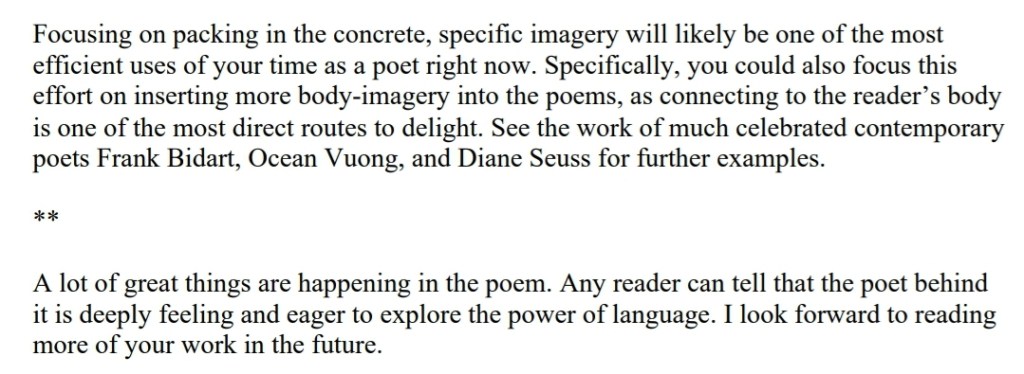
Below I’ve included a screenshot of the feedback I received from my professor. I realized the screenshot is very small so I wrote it below for clarity.

Hello, Manting–


Thank you for your commitment to your writing practice this semester.  It shows in your poems, especially the ones here.  I am captivated so often by the lyricism in your poems–the beautiful music of language & line–& the freshness of your images; for instance, “[laughter] waters flowers.”  I deeply admire the ways that your braid the Hmong language into your poems & without translating the words.  You let the words stand, the lines hold their own.  This is especially important given the subject of the first poem, a longing for home.  I hope to see you in another creative writing class & that you have a restful break, Manting.


Take care, ______


Hello, I would appreciate it if you would give me feedback on what you enjoyed and what you didn’t. If you have any questions, please don’t hesitate to comment or email me too! Thank you.

The 2020 Emerging Poet Prize Submission – I Believe In You

Author’s Note: Hello everyone! I hope you all are doing well and staying safe during this quarantine time. At the beginning of January this year (2020), I had a conversation/thought with myself about my writing. I’ve enjoyed writing ever since attending college, of course, I don’t enjoy all writing as academic papers are still not enjoyable for me. However, writing in general has been a way for me to express myself and helped me explore my identity. So, I came to the conclusion to see how far I can take my writing. I started taking my writing seriously and enter some competitions to see how I’d do in them.

‘I Believe In You‘ is a poem about me (Manting Xiong) and my journey from my elementary days to where I am now presently, in college. The poem is approximately 750 words in length. The target audience for this poem is males but specifically Hmong males. Even though the poem is more catered toward males, I believe the feelings and emotions I convey in the poem are relatable to everyone.

I undertook the writing of this poem for this competition after seeing an Instagram post by NFL quarterback Teddy Bridgewater where he wrote a letter of encouragement to kids who may have or are growing up like him. I want to emulate his post but replace it with my background and upbringing while including more deep topics. The reason why my format and stanzas are all over the place is to physically illustrate how difficult it was for me growing up. The path that we are on is difficult to navigate and do try to do our best to keep it straight but there are always things keeping us grounded.

I revised my piece after receiving feedback from Palette Poetry on June 22nd. Unfortunately, my piece was not selected to continue in the competition. However, I am not discouraged by that decision. As this means I can become a better writer/poet and improve my craft even more.

I hope this piece can provide some sort of encouragement to individuals who may have gone through some of the things I have experienced. It may be easier to give up and let go of everything but perseverance through those adversities will make them stronger. The past may not be what we wanted, but it doesn’t mean that we can’t change what our future is going to be. If you are reading this piece on your phone. Please turn it sideways for the correct format.

7 Minutes Read


To the little boy,
Preparing yourself for the harsh
realities of this world alone.
Your fevered ears have become deaf from all
the screaming and yelling in your home.
Waking up early to mentally prepare in the cold brutal morning.
Biting your bloodied tongue to keep the fake
peace for you are tired of mourning.
Your parents are divorced,
a drunken father, and a faraway mother.
"Grandma is in the hospital and inside, you are dying."
To the little Hmong boy,
Who stutters when speaking to
your intimidating Hmong elders.
Understanding respect is earned, not given.
Who speaks Hmong to yourself because
you are afraid of losing your language.
Choosing to stay home and take care of your lineage,
instead of learning traditions and beliefs.
You can always learn tradition later,
while the time left with your grandma is brief.
"Keeping her company, wishing to make her life greater."
To the teen boy,
Who matured quickly, leaving behind
Disney and friends thinking he was no longer naive and blind.
Growing taller in height and humility.
Disregarded family-like friends in order to build stability.
Losing the ability to answer
your teacher’s daunting questions.
Holding back the poisoned tears and having to lie
not by choice, but to survive.
"How do you explain to your teacher
about the battles, you are fighting?"
To the teen Hmong boy,
Fighting meaningless battles at home, in the classroom,
on the blazing court, on the breathless stage, and in your head.
Who found little comfort and joy from
the cafeteria food at school.
Who hated the end of practice,
for that meant you went back to the struggle grind.
And back to the negative thoughts on your troubled mind.
The hidden voices getting louder like an evil symphony.
"Silent cries that only the dead can hear
and tears that carries strength."
To the young boy,
Who continues to envy a house filled with warmth and laughter
Who survived your greedy first attempt at suicide.
Fortify your broken foundation with the gold that is knowledge.
Restoring your faith and determination
Be prudent, believe in the shadow you see and the light you don’t see.
Be charitable but don’t extend an olive branch to everyone.
Family is important, but when it starts to kill you internally, cut it off.
Express temperance, take it slow and recollect.
Resist the gluttony, lust, sloth, and wrath that will tempt you.
"Both the sins and virtues will accompany you on your journey."
To the young Hmong boy,
Shouldering the weight of being
the only Asian-American student in your class.
Who is grateful for the opportunity of an education.
Taking the opportunities and not wasting
the sacrifices of the soldiers from the Secret war.
Who cries for the community because they are too immature,
too violent to ever love and care for one another.
Disappointed that these OGs care only about money and politics,
not caring more about the youths, their opinions, and logic.
"Ours words fall on deaf ears because we are ‘young’."
To the young man,
Please know your worth and
understanding it is not your loss, it is theirs.
You are more vaulable to the right person than you ever
will for the wrong person.
You have so much to share and so much to give.
Keep your bar high, only the worthy will reach it.
But let's learn to love ourself first,
before we try to love someone else.
"If you can love the last person that much.
Imagine how much you will love the right one."
To the young Hmong man,
Your shattered heart is made of red glass.
Break down those glass panes, and rise. For
You will war! You will rage! You will shine!
You shall cry! You shall sing! You shall smile!
You must fight! You must learn! And most importantly, you must survive!
Keep moving forward day by day,
do not be trapped by your tragic past.
Give it your all, don’t worry about last time.
"There are still many things for you to accomplish,
it is not a crime to be happy, for you have yet to reach your prime.
To you,
Who is still smiling even through all the bullshit that life threw at you.
That is going to graduate from high school.
That is attending college as a first-generation student.
That is going to study abroad in a different country.
That is going to live out their dream and change the world.
Life will weave and move like this poem
because life is never a straight path like we hope for.
Don’t shy away from making mistakes.
"Continue to work hard and do not let bad opinions make you flop.
Adversity will make you strong and it will lead you to the top."
I was and still am that young Hmong man.
I have journeyed and is still on that path.
I want to give you a hug and
tell you everything is going to be okay.
Go ahead and cry, please, let it all out,
the tears we shed will water the path for the future dreamers.
I understand how you feel and
don’t apologize for the way you feel.
Your feelings are valid.
You can trust in this light at the end of this tunnel.
"Please know, I believe in you."

Below I’ve included some screenshots of the feedback I received from Palette Poetry.


Hello, I would appreciate it if you would give me feedback on what you enjoyed and what you didn’t. If you have any questions, please don’t hesitate to comment or email me too! Thank you.

Represent Represent

Author’s Note: This piece is half of a poem, and half of it is a spoken word. It talks about the things I represent and the many identities I have. At this point, I’ve probably performed this piece about six or seven times now throughout my duration in college. I received the idea of creating this piece by seeing Terisa Siagatonu perform her spoken word piece “Raise Up” at the 2018 Asian and Pacific Islanders in the Higher Education Conference in Oakland, California. Her piece resonated so much with me, and understanding my identity as an Asian-American and how powerful our voices and stories are to our communities. So, I borrowed some components from her piece and also added some twists of my own to make it personal for me. I hope you enjoy it.

5 Minutes Read


My question to you is. What do you represent? You may be confused by that question. Do you represent yourself? Parents? Friends? Brothers? Sisters? Family? Ethnicity? Culture? School? I’m going to move on to something else, but keep thinking about it.

In June, I turned 20. After finishing my job for the day. I went home and ate. While I was eating, I was talking to my 85-year-old grandma. My grandma asked me. “How old are you turning today?” I said, “20.” Suddenly, she asked me, “When am I going to get married?” “When am I going to have kids?” And I choked on my food for a solid 10 seconds. Later on in our conversation, the question that was most difficult for me to answer was “When am I going to get my bachelor’s degree? At this point, her voice was weak and soft. I told her, “Soon.” Which is a lie. But she understands that the lies I tell her are not lies. Because she was the one who taught me that. People keep secrets for a reason. And the truth can be worse than any lie to cover it up.

I represent her hopes and dreams.

The Hmong were involved in the Secret War in Laos. The war lasted from 1961 to 1975. In those 14 years, 30,000 Hmong soldiers died. Those soldiers always lived with a shroud on. When they die in a nameless place for the sake of that war, the place of their death becomes their grave, and their uniform becomes their shroud. These soldiers’ ages ranged from 12 to 60-year-olds. The war may have ended in 1975, but the killing didn’t. That was when the genocide began. Between 1975 and 1985, 100,000 Hmong people died trying to flee to other countries. Another 50,000 died just from trying to cross the Mekong River from Laos to Thailand. 

Due to our cooperation in fighting for the US in Laos. The Vietnamese government ordered all Hmong people to be killed. But you wouldn’t know this. Because it’s not in our K-12 History books. My grandma told me stories of her experience during those hellish years in Laos. One of her friends from her village volunteered to be a nurse in the war when it first began. When my grandma was able to see her friend again ten years later, her friend told my grandma that  “A doctor with a scalpel sees more death than a soldier with a gun.”

I represent those Hmong soldiers’ sacrifices.

With that knowledge about how difficult it was for my ancestors to come to the US. I used that as motivation to obtain a quality education. Because I know that this is a privilege! I’m here not trying to disappoint my ancestors and my fellow Hmong brothers and sisters. Who may have left those refugee camps… But their souls and spirits are still in the refugee camps in Thailand.


In my freshman year in high school. There were 17 Hmong students in my projected graduating class of 2017. Four years later, on graduation night. Only 16 Hmong students graduated. From Chico High. But only 4 of us were committed to a four-year university. Two years later, I met those twelve students who didn’t go to a four-year university again. Six of them don’t want to pursue education anymore.

I represent the Hmong youths that hasn’t been brought down by a system and society built against us.

When I attended a conference 8 months ago in April for Asian Pacific Americans in Higher Education. Also known as APAHE. In one of the workshops I attended there, the presenters asked us to participate in an activity. We were given a prompt to create lyrics and perform them for the people who were in that workshop session. The prompt was “What do you represent?” So naturally, I volunteered. And I began with…

Represent Represent!

And this is what I rep!
I represent the silent ones. I represent the ones that never won.
They expected me to fail. But nah. I ain’t like that.
I’m tough as nails, smooth like ale, and cold like hail.
They try to color my future like the Mekong.
While trying to make us forget about the napalms.
But don’t worry, it won’t take long.
Till I’m at the top. Because I’m never going to stop until I drop.
That’s because I represent myself, my legacy, and the Hmong.

So ask yourself, what do you represent?


Hello, I would appreciate it if you would give me feedback on what you enjoyed and what you didn’t. If you have any questions, please don’t hesitate to comment or email me too! Thank you.
Tub Xeeb Ntxwv, Manting

Author’s Note: Nyob Zoo! Thank you for clicking on this piece.  The idea of writing this piece came from a community called Hmong Legacy. Hmong Legacy supports Hmong students by creating a sense of community and empowerment. This allows students a great opportunity to create a connection with Hmong students and personal growth. Hmong Legacy has been around CSU, Chico since the Spring Semester of 2018. And ever since then, it’s grown and expanded.

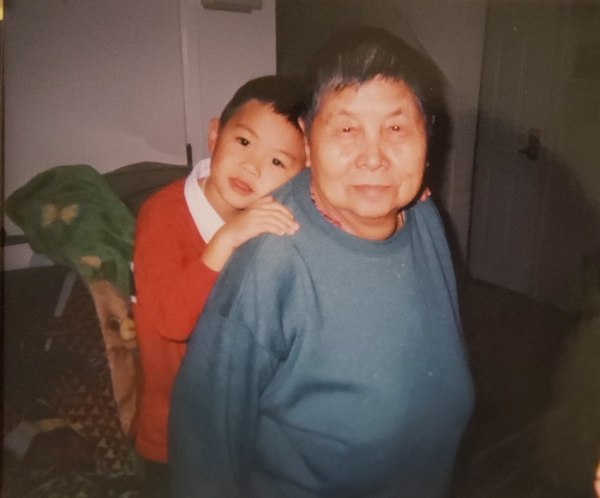
The first time I wrote about this topic was about my mom(s). I’ve already written a piece about ‘Family’ from one of the Hmong Legacy workshops. I didn’t want to revisit this topic because of repetition. But I came back to the topic of family because my grandma passed away this past March. And ever since then, I haven’t really thought about my grandma and her existence. More because I was running away from my feelings and not wanting to think about it. I spilled all the tears I wanted to before and after her death. 

While writing this piece, it was difficult to remember all the things my grandma had once told me when I was younger. It made me wish that I had been more patient as a child and as a teenager to sit more with her and listen to her. Ideally, I wanted to use more Hmong words within this piece, but my end rhymes in English were better, so I went with that option instead. For the most part, the Hmong parts should be translated into English already. Around eight or nine people told me that I made them cry after the event was done. It really made me thankful and happy that many others can relate and feel connected to my relationship with my grandma. To My Grandma, Zoua Lor

20190430_HmongLegacy_JH_012

5 Minutes Read


You will experience the tragic loss of a loved one in your lifetime. There’s no other way to get around it; everyone dies for various reasons, some are reckless, and they die young, or they grow old and slowly fade away. A loved one could be someone who inspired you, it could be a role model, your best friend, a family member, basically, anyone who is important to you. We all know that sooner or later, the time will come for all of us to leave. My grandma, unfortunately, passed away this past March. 

My grandma took care of me when no one else did. She would often get asked, “Those aren’t your kids, so why are you taking care of them?” The phrase I always hear my grandma say is “I raise them because I love their eyes.” (Lawv tsis yog koj yug, vim li cas koj hlub. Kuv hlub lawv ob lub qhov muag, kuv thiaj li hlub law.) I had a different relationship with my grandma than anyone else. I was her favorite. The favorite among both her children and grandchildren. No, I didn’t ask or do anything special for my grandma to become her favorite.  It just naturally happened, and I’m the person I am today because of her.

Me nyuam ntsuag. The literal translation of this from Hmong to English means a child without parents. It is a derogatory term used to degrade people in the Hmong community who don’t have parents. My parents divorced when I was six months old. My father won my brother’s and my custody in court. I don’t necessarily fit all the criteria to be placed into that category, of being a me nyuam ntsuag. But growing up, I felt like one. And the only person who held me down was my grandma.

Grandma, I remember the words you would tell me when I used to feel down. “It took me 3 years to make your body and heart strong. Don’t let someone else destroy it when I’m gone.” Even when you would lecture me, I knew you were doing it for my benefit. You said to me. “Luag tias kom paub tab, txhob ua neeg poob qab los lawv yeej tos ntsoov thaum yus yuav poob.” The translation is: “They say to grow up and not be a failure. But they’re already wishing for your downfall.” And now, when I think about you, all I remember is the various things you would lecture me about. You would always start off with.

My grandson Manting
Always be kind and humble, and don’t let others stumble.
Don’t eat too many chips, and make sure to wipe your lips.
Find a wife who will brighten up your life.
It’s okay to cry, instead of faking a smile and lying.
Smile more, because you’re naturally a happy person deep down to your core.
Even if you’re far away, just know you’ve done enough in your day.
Love yourself, feel lost, but never doubt yourself.
You deserve to be happy, and one day your kids will call you daddy.
Don’t be sad if you can’t call me on your phone; just know you’re never alone.
Because you’re still in my heart, even when we’re far apart.

There are many more things you’ve taught me. But it’ll be too long to name them all. I know I said all the things I wanted to tell you before you left already. But in case you’re wondering how I am, here it is.

Nyob zoo kuv grandma.
Now you aren’t suffering anymore, are you smiling more?
Rain or shine, your foolish grandson is doing fine.
I’m thinking too much nowadays because I’ll be going far away.
I’ve gotten really busy, but compared to you, my life is easy.
I’m trying to eat all three meals, but don’t worry, your cooking is always the real deal.
As hard as it may be, please be patient with me.
I know I said goodbye then, but I know I will see you again.

I’ll continue to slowly work for my future. In the end, I’ll win. Because I’m your grandson, Manting.
(Kuv mam li maj mam khwv rau kuv lub neej, Thaum kawg, kuv mam li yog tu yeej. Vim kuv yog koj tub xeeb ntxwv, Manting.)

20190430_HmongLegacy_JH_015

Hello, I would appreciate it if you would give me feedback on what you enjoyed and what you didn’t. If you have any questions, please don’t hesitate to comment or email me too! Thank you.
The View From The Summit

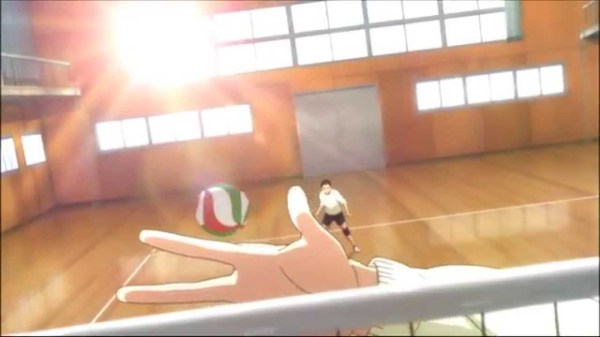
Author’s Note: Hello I wrote this poem in my ENGL 220W class during college. My inspiration for this poem is from my passion for volleyball and from the anime Haikyuu. To make the imagery more clear while you’re reading the poem. Image a volleyball player floating up to spike a ball. When people hear or read the phrase ‘The view from the summit’ they often think about the view from an actual mountain/ summit. But the view from the summit that I’m trying to make others see is the view when the spiker’s head is above the net. And they see the other side from the very top. Hopefully, that will make things more clear. Enjoy!

1 Minute Read


Time slows down, almost to a stop.
Surprised white eyes stare with intense curiosity.
As I walk onto the court, human iron walls enter as well.
The gigantic iron walls are blocking my view.
Like flies and mosquitoes, they loom and appear constantly.
Daylight sneaks through those iron walls like cracked windows.
Black thin strings isolate me from my fear.
Slowly, I fly higher than the tall and long white tape.
The red and white warn me from getting near.
It is drawn to me, like a magnet.
And leaves me with its past emotions.
I see it fly away with determination and fear.
The top lights up like fireworks on the Fourth of July.
It ends quickly and sets up for another round.
The view from the summit doesn’t discriminate,
all can reach it.


Hello, I would appreciate it if you would give me feedback on what you enjoyed and what you didn’t. If you have any questions, please don’t hesitate to comment or email me too! Thank you.

Ball Handles

Author’s Note: Hello. This was a persona piece I wrote in my ENGL 220W class in college. It’s about the life, feelings, and journey of a volleyball or in general any ball. Ummm… I didn’t try to make it sexual in any way but it could sound like it. Just know I had no intention to make this sound sexual. Hopefully, you’ll enjoy this.

1 Minute Read


They don’t appreciate me.
To them, I’m just a toy
They play with it when they’re bored.
I fly wherever they hit me
Towards with their hard hands.
If I don’t cooperate,
they also kick me with their stinking feet.
But some hands are soft.
They gently push me forward
And I float lightly to the other side.
Eventually, I will deflate
And I won’t be needed no more.
That’s the sad life of a ball.


Hello, I would appreciate it if you would give me feedback on what you enjoyed and what you didn’t. If you have any questions, please don’t hesitate to comment or email me too! Thank you.

Simple Days

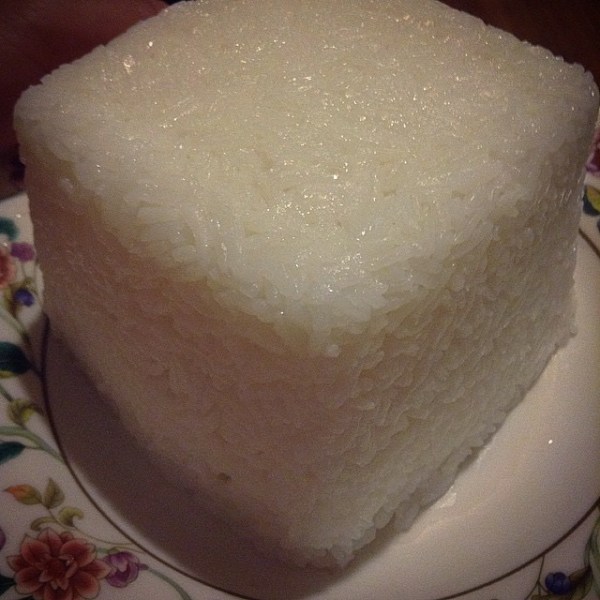
Author’s Note: Hello! This was a writing assignment I had in my college English class; ENGL 220W. Quick story about life and how the younger us had a simpler life. I also had a friend who wrote a piece about eating rice and I gained inspiration from them for this. Enjoy!

4 Minutes Read


Laying on the soft yet stiff bed,
I burned with the feeling of wanting to leave.
My body didn’t cooperate with my mind.
And thus, I lie still on my bed patiently waiting.
My green childhood blanket next to me gave me extra warmth.
I always remember when I was sick, the number one food that I had to consume was, rice porridge.

Something so slimy and bland never tasted so good.
Rice by itself is already bland, combining it with water too?
An indescribable taste.
No energy was needed to chew the soft jasmine rice.
You could swallow the hot gooeyness of the porridge and you’ll still be fine.

The bowl of hot and steamy rice porridge sitting on top of the counter next to me.
Its presence gave me a sense of comfort.
I bring it slowly towards me and rest it on top of my lap.
My warm body welcomes the warmth from the bowl of rice porridge as I scoop a spoonful into my mouth.

I move it back and forth from left to right to cool down the rice porridge as much as possible before I swallowed.
Taking in a sigh of relief for not burning myself.
I go back in for a second spoonful and repeat the sequence until I finished the bowl.

I never really understood why my fellow classmates in elementary would tell me that when they were sick.
They would eat a bowl of chicken noodle soup instead of rice porridge.
Slowly, as I grew up and got more educated.
I realized that I wasn’t privileged enough for ‘chicken noodle soup.’
Later in life, I tried it once and I was very disappointed.
“This is what you eat to get better?!” was my first initial reaction.
I decided to stick with rice porridge as my cure food for my sick days.

Sitting outside in the hot summer heat. I ate my lunch.
A bowl of rice and ice water or water rice with a tiny slice of watermelon.
The coldness from the icy water rice radiating from the porcelain bowl.
My small hands hold the bowl tightly afraid that I’ll drop it.
After each spoonful of icy water rice, I nimble a little bit from the tiny slice of watermelon.
The taste of the sweet red meat of the watermelon fruit lingers on my tongue after I swallow. Once again, I repeat the same steps until I finished my bowl of icy water rice and the tiny slice of watermelon was gone.

I’m not sure if I’m the only person that feels this way but I get both happy and sad after I finish eating something.
I feel happy and grateful because I was able to eat something and not have my stomach empty. But I also feel sad because after eating the food I have.
I don’t have it anymore. I don’t really know when or why I developed these types of feelings.
Maybe it’s from my upbringing in an underprivileged family.
For me that has made my relationship with food different because I’m more grateful for what I have and the amount of food I eat.

I kinda miss those days.
The simpler days of just sitting outside eating a bowl of icy water rice in the summer heat or on a cold rainy day,
eating a bowl of hot and gooey rice porridge.
They were way simpler than today.
Less stress, fewer worries, fewer problems, and more happiness maybe?
I miss them, but then I think of my childhood as a whole.
And I’m reminded that I’m in a better place now.
But I’ll still have those bowls of icy water rice and hot rice porridge once in a while.

It’s simple.
Three scoops of hot steamy rice into the porcelain bowl.
One for myself.
One for my ancestors.
And one for the ones who aren’t here anymore.
Let the rice sit for a couple minutes to cool down. While the rice is cooling down.
Take a water bottle out of the freezer.
Hit it once a bit hard but not too hard to create a reaction that freezes the water.
Carefully pour the icy water over the cool downed rice.
Once the water reaches the top and barely passes over a few grains of rice, stop pouring.
Grab yourself a spoon and enjoy.
See, it’s simple.
Like the simple days of life.


Hello, I would appreciate it if you would give me feedback on what you enjoyed and what you didn’t. If you have any questions, please don’t hesitate to comment or email me too! Thank you.
Website Powered by WordPress.com.

Up ↑